
Regenerative design
Living Building Challenge, Explained
A framework for homes that give more than they take: clean energy, careful water use, healthy materials, beauty, equity, and deep connection to place.
Plain-language guide
Seven petals, practical homeowner benefits.
The Living Building Challenge can sound technical. For Lahaina homeowners, it means a home designed to be healthier, more self-reliant, more durable, and more connected to the land and family life.
These homes are Living Building Challenge-informed and designed around LBC principles. Certification depends on project scope, performance, documentation, and verification.
Health + happiness
Regenerative design is also a mental health strategy.
After disaster, a home should reduce stress wherever it can. Cleaner materials reduce exposure to offgassing. Natural light and natural ventilation make rooms feel calmer and easier to live in. Solar, efficient cooling, and battery storage can lower monthly utility anxiety.
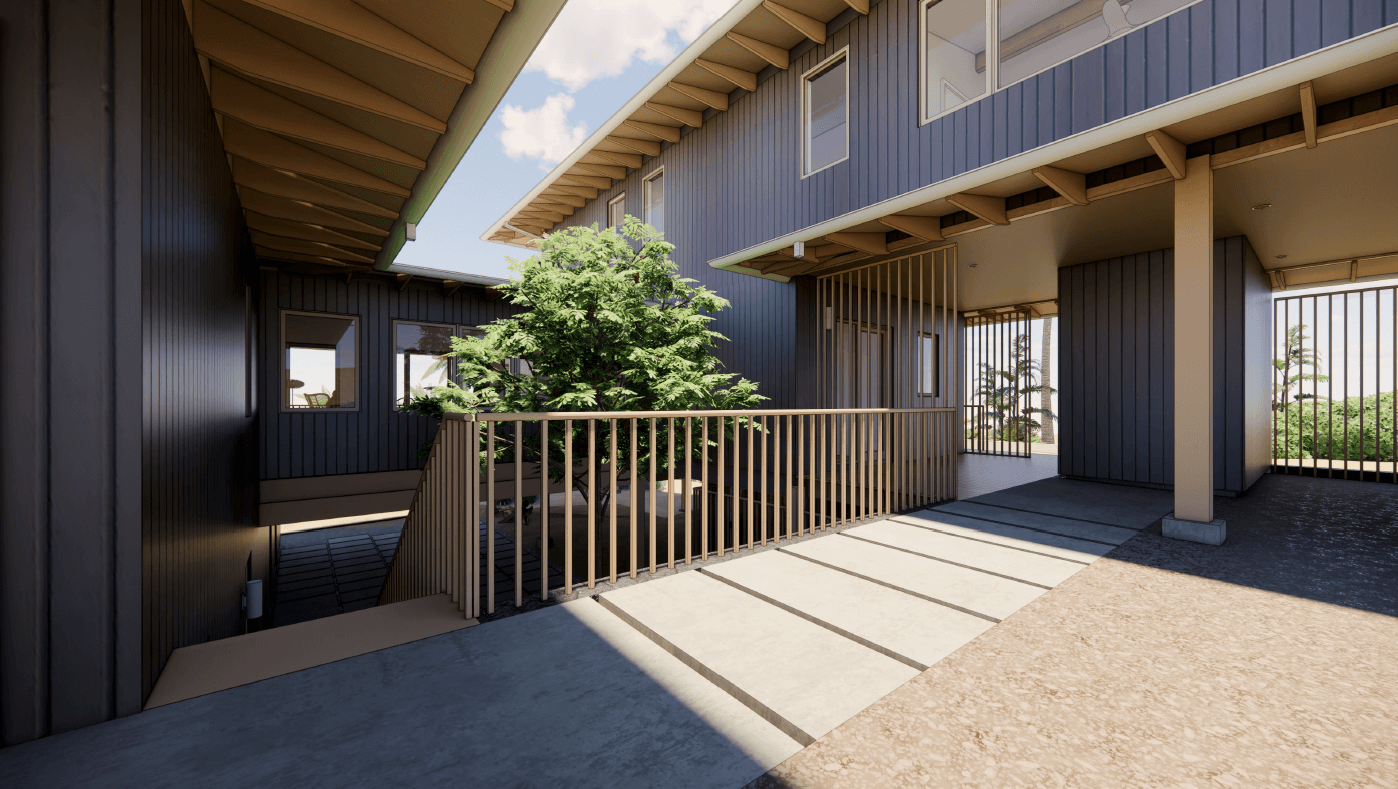
Deep overhangs keep interiors cooler and create shaded outdoor rooms. Landscape can reduce heat island effect, provide food and shade, manage water, and reconnect daily life to the ʻāina. These are not luxuries; they are part of resilience.
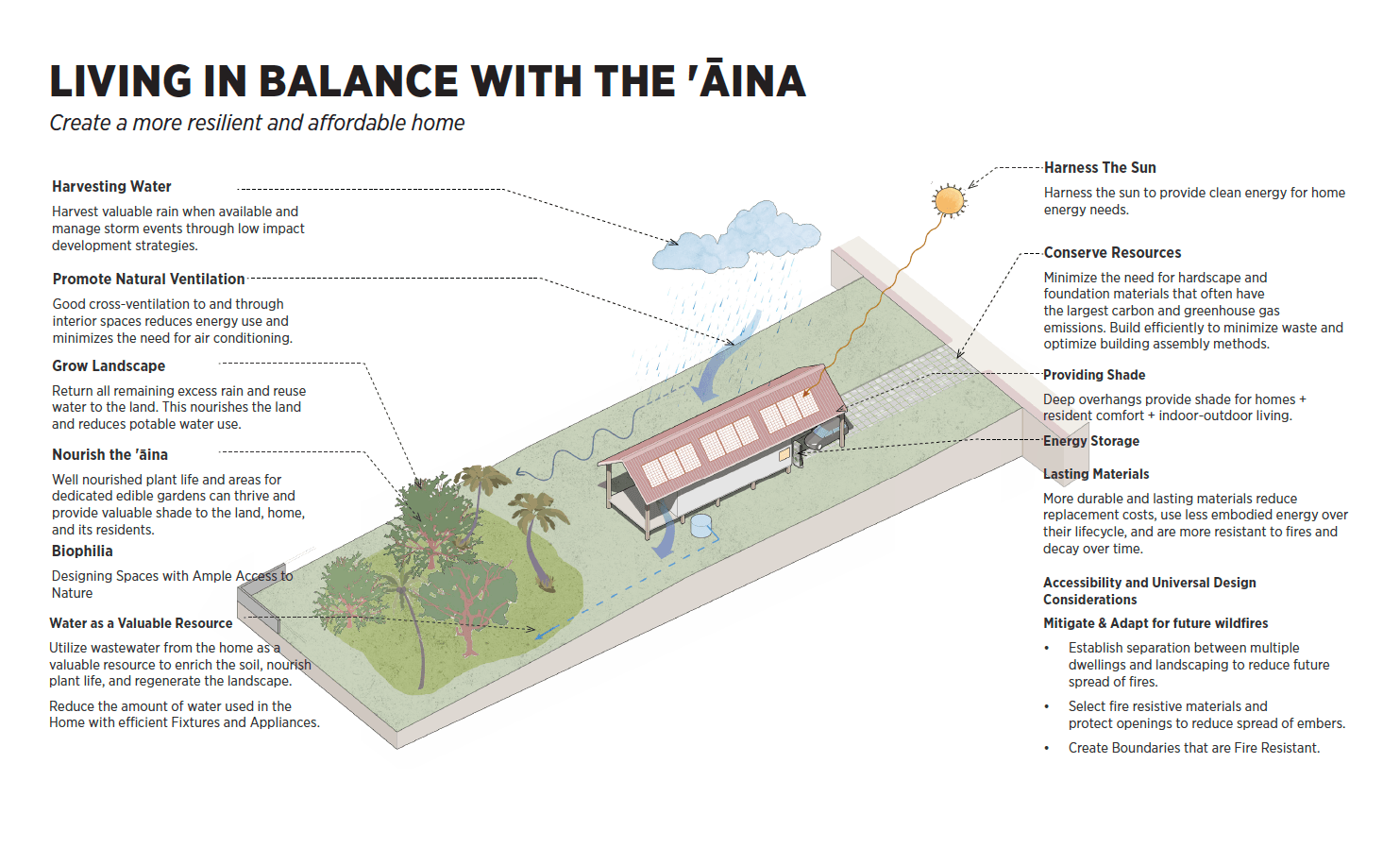
Living in balance with the ʻāina
One diagram, many regenerative decisions.
The smaller-home system translates the petals into practical design moves: harvest water, shade the home, promote natural ventilation, grow landscape, store energy, select durable materials, and reduce wildfire vulnerability.
PlaceWaterEnergyMaterialsHealth + HappinessEquityBeauty
The seven petals
A whole-home framework, not a checklist.
Each petal touches daily life: comfort, utility burden, healthy air, water responsibility, materials, family connection, and a home that belongs to its place.
Living Building Challenge7 Petals
Water
Energy
Materials
Health + Happiness
Equity
Beauty
Place Petal
Place
Restore a healthy relationship with nature.
A home shaped by Lahaina's sun, wind, rain, cultural context, and recovery needs.
Deep shade, lanais, courtyard life, climate-adapted landscape, and site-specific lot review keep the design rooted in place.
Water Petal
Water
Operate within the water balance of place and climate.
Reduce demand, reuse water where feasible, and return value to the landscape.
Efficient fixtures, stormwater thinking, septic-to-bioreactor-to-sand-filter-to-drip-irrigation reuse, and watershed guidance.
Energy Petal
Energy
Rely on current solar income.
Lower utility burden through efficiency first, then renewable energy.
High-performance envelopes, natural ventilation, efficient cooling, 11.5 kW PV, battery storage, and all-electric systems.
Materials Petal
Materials
Use materials that are safe through time.
Healthier interiors, lower carbon, more durable assemblies, and fewer toxic exposures.
Red List-aware selections, FSC wood strategy, panelized construction, durable cladding, and reduced construction waste.
Health + Happiness Petal
Health + Happiness
Support physical and psychological health.
Cleaner air, lower heat stress, daylight, natural ventilation, lower utility anxiety, and daily connection to nature.
ERVs, UV purification, shaded indoor-outdoor living, timber ceilings, biophilic spaces, cross-ventilation, and deep overhangs that make the home more comfortable.
Equity Petal
Equity
Support a just and inclusive world.
A rebuild pathway that helps keep homes accessible over time.
Community Land Trust ownership, right-sized design options, lower operating burden, and local workforce training.
Beauty Petal
Beauty
Uplift the human spirit.
Architecture that feels like home, not just shelter.
Warm interiors, protected lanais, gardens, family gathering spaces, craft, shade, and moments of delight.
Source framework
See how the petals show up in the flagship home.
Petal summaries are adapted into homeowner language from the International Living Future Institute's Living Building Challenge framework.